AI in Website Marketing: Real-World Applications That Deliver Results
AI is reshaping how websites attract visitors, personalize experiences, and convert customers. A practical look at where it is actually making a difference in marketing today.

A few years ago, AI in marketing sounded only like something from a conference keynote: exciting, futuristic, and slightly abstract. Today it’s much less theoretical. AI is already quietly shaping how websites attract visitors, guide them through content, and turn them into customers.
Instead of replacing marketers or developers, AI tends to play a different role. It removes friction. It helps process data faster. It suggests improvements we might not have noticed ourselves.
Let’s look at where this is actually happening in real-world website marketing!
Content creation is faster - but strategy still matters
Anyone responsible for a website knows the pressure to publish content consistently. Blog posts, landing pages, product descriptions, newsletters - the list never ends. AI has made this part of marketing dramatically easier.
Today, AI tools can help generate article drafts, suggest headlines, create outlines, and even propose SEO keywords before the first paragraph is written. For many teams, this means the difference between spending hours staring at a blank page and starting with a structured draft that only needs refinement.
AI tools like Gemini, Perplexity or ChatGPT can help you brainstorm ideas and identify keywords you might have missed. For example, before you even start writing, AI can do the groundwork for you, suggesting the most relevant keywords for your topic. This helps save time on research, so you can focus on refining the message and tone of your content.
What also makes a real difference here is the ability to write effective prompts. The better the instructions you give an AI tool, the better the output you get in return. A strong prompt should clearly define the topic, audience, tone, structure, and purpose of the content. This is where human expertise still plays a central role - because AI works best when it is guided well.
AI speeds up the process - but the human part, the strategy and the perspective, still matters just as much.
AI is changing not only how content is created, but also how it is displayed
There is another important shift happening at the same time - AI is also changing how content is presented in search results.
Google’s AI Overviews are a good example. Instead of showing only a list of links, Google increasingly generates AI summaries that combine information from multiple sources directly on the results page. For users, this means they often get an answer immediately without clicking through several websites.
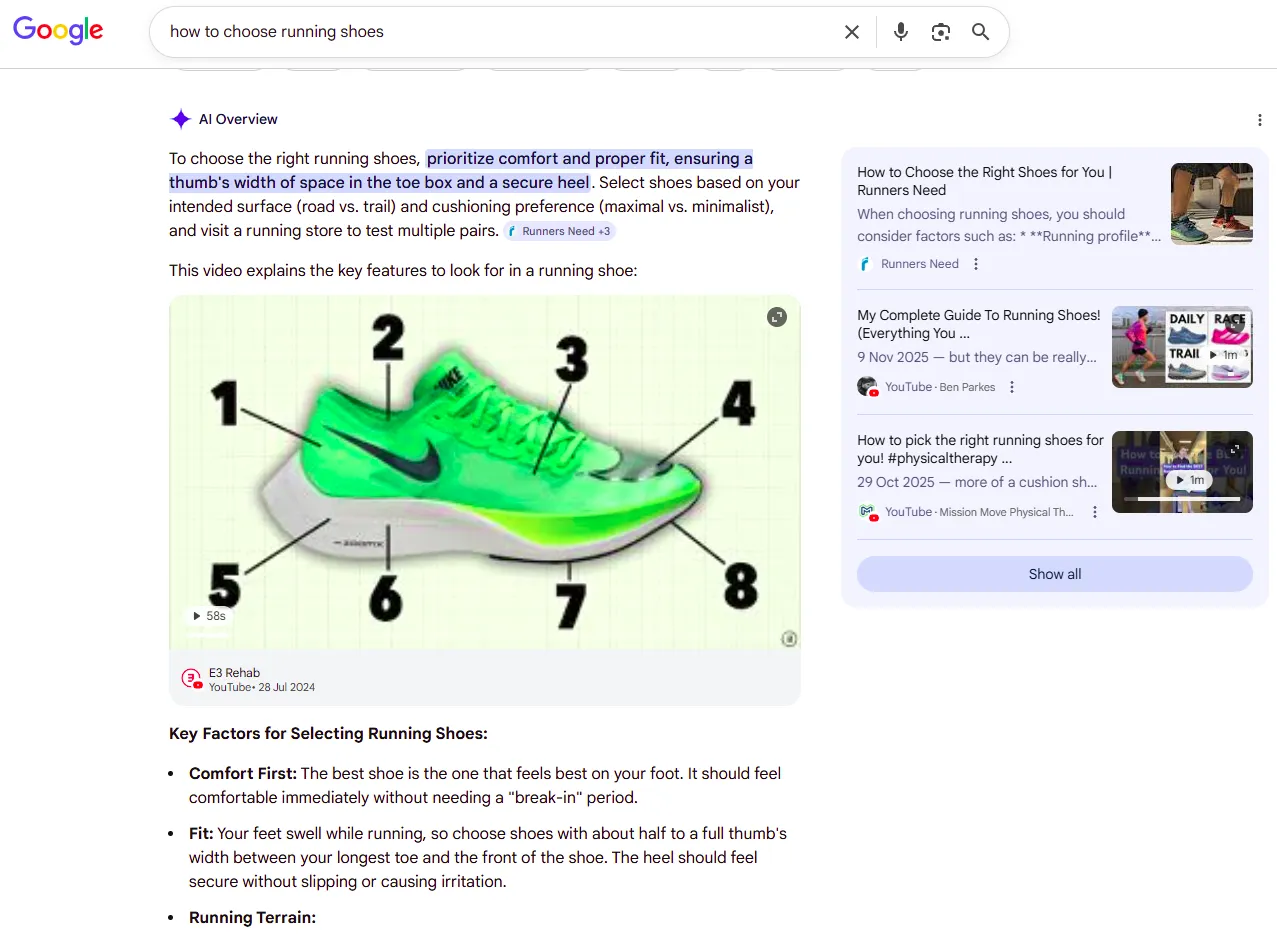
Content is no longer competing only for the first position in search results. It is also competing to be included in the AI-generated summaries that appear above those results.
Structure your content in a way that makes it easier for AI systems to extract clear answers. A few simple practices help:
- include concise explanations of key concepts,
- use clear headings and structured sections,
- add FAQ-style paragraphs that directly answer common questions,
- focus on topical authority, not just individual keywords.
Well-structured, informative content has a much higher chance of being used as a source for AI summaries.
Personalization is finally becoming real
For years, marketers talked about personalization. In practice, it often meant something simple: inserting a user’s name into an email or displaying a slightly different banner for returning visitors. Well… AI changes that!
Instead of relying on fixed rules, AI systems can analyze visitor behavior in real time - what pages someone reads, where they came from, how long they stay, and what they ignore. Based on this, the website can adapt.
For example, if someone spends time looking at a specific product category, AI can show them similar products or related blog posts on the next page they visit.
If you’re using a WordPress site, you can integrate plugins like OptinMonster or Dynamic Content for Elementor to serve personalized pop-ups or messages based on users’ browsing history. This increases engagement and keeps visitors interested in your site.
AI for better SEO: working smarter, not harder
As you may know, SEO is a long game. It takes time, strategy, and constant adjustments. Luckily, AI can help you make smarter decisions about your SEO strategy without getting overwhelmed by endless data and algorithm changes.
One of the most tedious tasks in SEO is conducting keyword research. AI tools can take this job off your plate by automating the process and identifying relevant keywords faster than you can type them.
You can use AI-powered tools like Ahrefs, SEMrush, or Surfer SEO to automate keyword research. These tools not only identify high-volume keywords but also cluster related terms based on search intent, making it easier to target the right audience. For example, if you’re targeting “AI tools for marketing,” AI tools can suggest secondary keywords like “AI for content generation,” “AI for digital marketing,” and “best AI marketing software.”
AI tools can complement your efforts, making your SEO workflow more efficient and helping your content rank higher with less time and effort.
Chatbots and AI Assistants: no more waiting
Not that long ago, chatbots were more of a curiosity than a real support tool. You’d ask a question, get a scripted answer, and quickly look for a “contact us” page instead. That’s changed quite a bit.
Today, AI-powered chatbots and assistants are becoming a standard element on modern websites - and, when implemented well, they’re genuinely useful. Instead of following rigid scripts, they can understand context, respond in natural language, and guide users toward relevant information.
When someone lands on your website, they often have a specific question in mind. If they can’t find the answer within a few seconds, there’s a good chance they’ll leave. AI assistants help bridge that gap by providing immediate, conversational support.
A tool like edrone or Callback24 uses AI to engage customers in meaningful conversations, direct them to the right product pages, and help them quickly find answers to their questions.
Final thoughts
As you can see, AI isn’t here to completely take over your job or replace the creativity and strategy that humans bring to marketing. Instead, it’s a powerful tool that can help you streamline processes, enhance user experiences, and make smarter decisions based on data.
The key is knowing where to use AI and how to integrate it into your marketing workflow. By embracing AI’s real-world applications - whether in content creation, personalization, SEO, or experimentation you can free up time, improve your results, and build a more effective, data-driven website.
So, what’s your next step? Start small. Pick one area of your marketing to experiment with AI, whether it’s using AI for better content or implementing chatbots to improve engagement. You might be surprised by the immediate improvements.
Tags
Keep Reading

Or maybe a warm-up before Gdynia? Join us at CMS Conf Local in Vilnius
Before we meet at the main CMS Conf 2026 in Gdynia on November 12–14, we’ll see you on October 24 at CMS Conf Local: Vilnius.

From Browsers to Buyers
Katarzyna Janoska on why generic copy kills conversion faster than slow load times, and why reassurance is the real job of a small business website.

Most AI Tools Won't Survive
Damian Ślimak on twenty years of automation before it had a name, why clients never ask whether AI is involved, and the one skill still worth training.