Building a Conference From Scratch: Behind the Scenes with the CMS Conf Team
Maciek Palmowski, Magdalena Magdziarz, and Mariusz Szatkowski discuss budgeting, venue logistics, and breaking platform silos for CMS Conf.
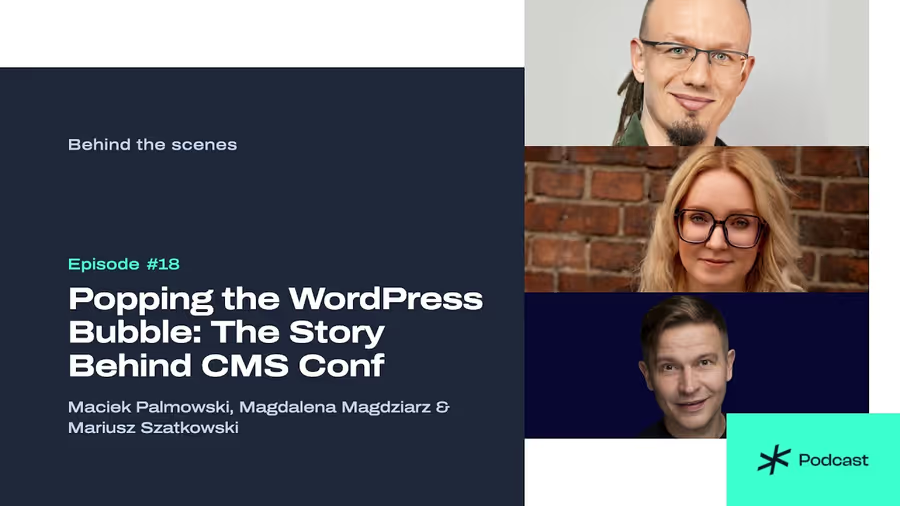
Most technical conferences focus on a single technology stack, creating insular communities that rarely exchange architectural insights. In the 18th episode of the CMS Conf Podcast, host Ania Witko sits down with the organizing trio behind CMS Conf: Maciek Palmowski, Magdalena Magdziarz, and Mariusz Szatkowski. Together, they review the operational mechanics, financial friction, and architectural goals required to launch an independent, multi-platform conference from the ground up.
CMS Conf 2026 brings together developers, architects, and technical leaders from across the content management ecosystem for three days in Gdynia. With hands-on workshops on Thursday and multi-track sessions covering modern architectures, it is designed for teams evaluating or scaling content platforms. Check the full schedule and secure your ticket at cmsconf.com to join the community in November.
Breaking the Single-Platform Bubble
Specialized developer communities often operate in echo chambers. A team working exclusively with WordPress solves content modeling, data validation, and asset delivery within that specific ecosystem. Simultaneously, teams working with Drupal or Joomla encounter the same structural hurdles, yet neither group shares findings.
Maciek Palmowski points to an architectural pattern he observed during an engineering talk on Drupalisms at PHP UK. The speaker detailed architectural compromises that the Drupal community spent years rectifying. Those mistakes matched the technical debt patterns in the WordPress ecosystem almost line for line. Because both groups operated in separate silos, each team solved the same architectural defects independently, learning the hard way through production outages rather than collective knowledge exchange.
The modern content landscape makes this isolation increasingly costly. Decoupled frontends, static site generators, and Headless CMS backends require developers to integrate multiple decoupled components. Emerging tools like Payload CMS demonstrate how schema-first, TypeScript-native platforms approach content storage. When teams stay confined to a single platform conference, they miss alternative architectural solutions that could simplify their current stack.
Venue Infrastructure and Location Constraints
Organizing an inaugural conference introduces physical and logistical constraints that mirror infrastructure deployment. The organizers selected Gdynia, specifically the Pomorski Park Naukowo-Technologiczny (PPNT), as the physical host. Mariusz Szatkowski, who manages venue coordination and logistics, emphasizes that venue selection determines how attendees navigate between parallel tracks and informal discussions.
PPNT is a dedicated technology campus rather than a generic hotel ballroom. The facility provides distinct lecture halls, high-capacity networking areas, and spaces configured for technical workshops. The decision also carried operational benefits. The team had previously organized community events in the same facility, eliminating unknowns regarding network throughput, audio-visual routing, and physical crowd flow.
Timing and geography imposed practical financial trade-offs. Staging the event in mid-November places it outside the coastal tourist season. Hotel rates and transportation throughout the Tricity metropolitan area drop significantly compared to summer months. This gives attendees and sponsors access to modern tech facilities without the inflated price tags of capital-city venues.
Cash Flow Asymmetry and Budget Friction
Financial modeling for a first-year conference differs sharply from established events. An unproven event has no attendance history or audited post-event metrics to present to enterprise sponsors. The sales cycle for sponsorships stretches across several months, requiring multiple rounds of corporate sign-offs.
Operational liabilities, however, operate on rigid timelines. Venue reservations, catering deposits, security personnel, and badge printing require advance cash commitments. Mariusz Szatkowski highlights this cash flow asymmetry as the most dangerous failure point in early-stage event planning. Commitments from sponsors often arrive late in the production cycle, creating weeks where organizational liabilities outpace confirmed receivables.
Regulatory and operational details compound the budget pressure. Invoicing rules, varying VAT rates across international sponsors, and city tax compliance require formal accounting oversight. A single schedule overrun at the end of a conference day can trigger mandatory overtime charges for venue security and technicians, quickly eroding thin contingency margins.
Curation Under Unexpected Proposal Volume
The organizers initially worried about filling a multi-track agenda across competing CMS ecosystems. Without a proven brand, attracting engineering leads from outside the core WordPress network seemed difficult. Instead, the team faced an oversubscription problem.
Dozens of talk submissions arrived from engineering teams across Drupal, Joomla, and Payload CMS, expanding the final agenda to roughly 50 sessions across three days. This response revealed a structural gap in the industry. While large enterprise CMS platforms organize regional user conferences, smaller open-source and independent CMS projects lack the distributed density to host localized standalone events. A vendor-neutral conference provides these projects with a European stage to present architectural decisions to a qualified audience.
To ensure the schedule provided practical value, Magdalena Magdziarz structured the conference to run from Thursday through Saturday. Rather than confining the schedule to weekend presentations, Thursday serves as a dedicated workshop day. Attendees spend several hours implementing working code alongside maintainers before general conference sessions begin on Friday.
Operational Discipline and Community Exchange
Conference value is rarely determined by slides alone. The hallway track - spontaneous technical debate between developers facing similar production constraints - often yields the most durable technical takeaways. Mariusz Szatkowski notes that basic logistical provisions, including reliable catering and open lounge areas, directly influence how long attendees remain on-site to discuss system designs.
Cross-pollinating technical teams breaks down unnecessary tribalism. When engineers compare how different systems handle schema migrations, caching layers, and decoupled rendering, they gain a clearer perspective on their own technology choices. The conversations held in Gdynia aim to shift the conversation from defensive platform advocacy toward rigorous system analysis.
Building an independent event requires community trust, balanced logistics, and an open technical mindset. If your team is evaluating CMS migrations, headless setups, or modern editorial workflows, attending CMS Conf offers direct access to practitioners who have solved those challenges in production. Explore the workshop lineup, review the speaker agenda, and book your pass at cmsconf.com before registration closes.
Tags
Keep Reading
108 Unit Tests in 6 Hours: Reliable AI Coding on One Repo
Three developers, one tester, local AI agents, one repo, six hours. What kept 108 tests green after a restart, and what a hackathon PoC does not prove.
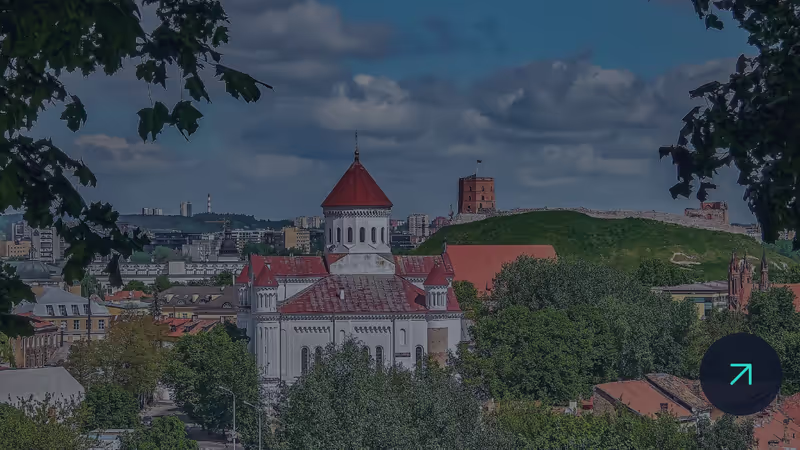
Or maybe a warm-up before Gdynia? Join us at CMS Conf Local in Vilnius
Before we meet at the main CMS Conf 2026 in Gdynia on November 12–14, we’ll see you on October 24 at CMS Conf Local: Vilnius.

From Browsers to Buyers
Katarzyna Janoska on why generic copy kills conversion faster than slow load times, and why reassurance is the real job of a small business website.